
From $0.20/ft

128 Products
-
 Solid THHN/THWN-2 WireFrom $0.20/ft
 -
 Solid THHN/THWN-2 WireFrom $0.20/ft
 - Solid THHN/THWN-2 WireFrom $0.20/ft
- Solid THHN/THWN-2 WireFrom $0.20/ft

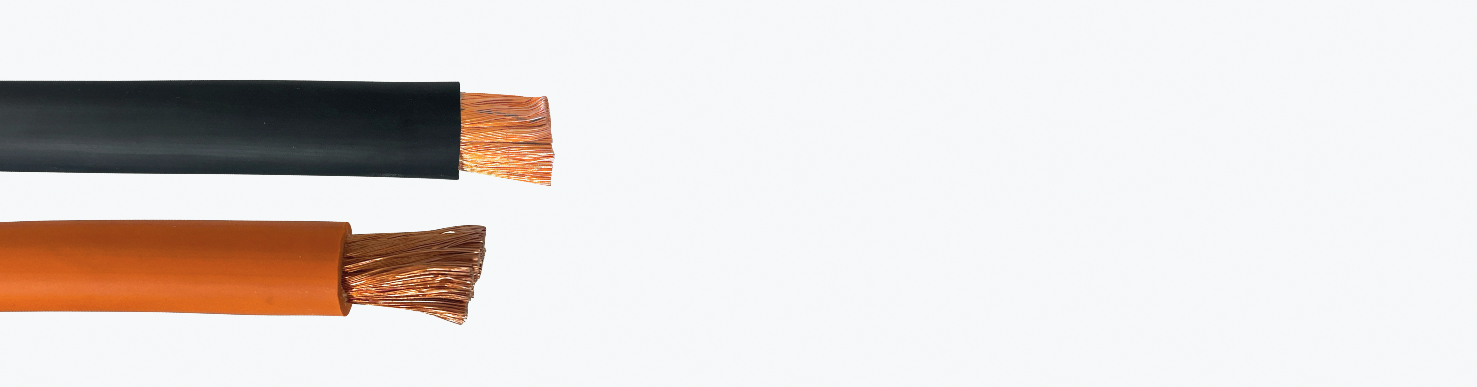
Welding cable is a highly flexible, heavy-duty copper electrical cable originally designed for powering secondary circuits of electric welding machines (leads and clamps). Due to its extreme flexibility and thick insulation, it is also widely used for car audio installations, battery bank interconnects, inverter wiring, solar power systems, and heavy-duty grounding leads.
Welding cable is significantly more flexible than standard battery cable (such as SGT or SAE). It is engineered with high-density fine copper stranding—available in Class K (30 AWG strands) and ultra-flexible Class M (34 AWG micro-strands)—encased in a durable, oil-resistant EPDM jacket. This allows it to bend easily around tight engine bays, battery boxes, and conduit corners without kinking or fatiguing.
Yes! Welding cable is one of the most popular choices for 12V, 24V, and 48V DC battery banks, winches, and power inverter hookups because its high strand count handles heavy DC current draws efficiently while making terminal crimping and routing through tight spaces much easier. (Note: Welding cable is typically rated for 600V maximum).
The main difference is strand count and flexibility. Both feature 100% pure copper and durable EPDM insulation, but they differ in construction:
Fast! At Wire America, most standard welding cable orders—including custom cut-to-length footages and full spools—are processed and shipped within 24 to 48 business hours.
Need it sooner for an urgent job site repair? We offer expedited shipping options at checkout so you can secure guaranteed delivery dates.
(833) 268-8644
Welding cable is a highly specialized, portable power cable designed to carry high-amperage currents under conditions of extreme physical abuse. Constructed with thousands of fine-stranded bare copper conductors, these cables are categorized by their flexibility: Class K (Standard Flexible) and Class M (Extra Flexible). The high strand count allows the cable to be easily maneuvered around corners, through tight spaces, and over rough shop floors without kinking or internal conductor fatigue. Encased in a heavy-duty EPDM rubber or Neoprene jacket, these cables are built to resist sparks, abrasion, grease, oil, and water. While primarily used for arc welding leads, their superior conductivity and flexibility make them the industry standard for battery leads, temporary power bypasses, and high-current grounding applications.
Installation Note: When selecting welding cable, always calculate the total circuit length (the sum of the lead and the ground) to ensure the gauge is sufficient for the amperage. A cable that is too small for the load will cause excessive voltage drop and heat, leading to poor weld quality and potential jacket failure. When terminating Class M cable, it is highly recommended to use copper ferrules or heavy-duty lugs specifically designed for fine-stranded wire to ensure a secure, low-resistance connection that won't vibrate loose.
Get this thing filled up so you can help Wire America!