
From $0.20/ft

128 Products
-
 Solid THHN/THWN-2 WireFrom $0.20/ft
 -
 Solid THHN/THWN-2 WireFrom $0.20/ft
 - Solid THHN/THWN-2 WireFrom $0.20/ft
- Solid THHN/THWN-2 WireFrom $0.20/ft

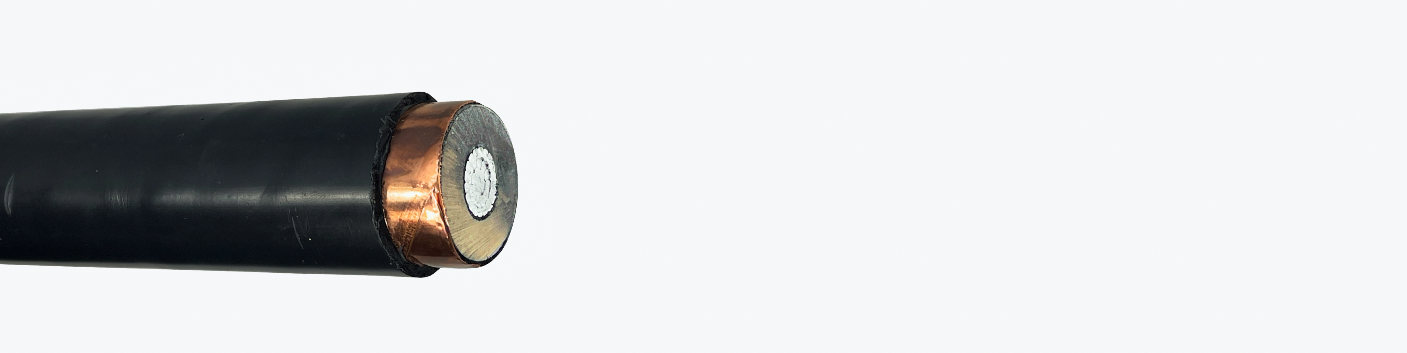
Aluminum MV-105 (15kV–35kV) is a robust medium-voltage cable designed for primary power distribution in demanding industrial plants and utility grids. It features an aluminum conductor and is engineered for durability in various installations, including conduits, underground ducts, or direct burial. This cable is a standard for high-voltage reliability, ensuring efficient and safe power transmission.
The '105' in MV-105 indicates the cable's maximum continuous conductor operating temperature, which is 105°C (221°F). This higher temperature rating allows the cable to safely carry more current compared to standard MV-90 cables, making it suitable for high-load and high-ambient environments.
Aluminum MV-105 cables in this category are specifically designed for medium voltage applications, supporting a range from 15kV to 35kV. This makes them suitable for bridging the gap between low-voltage distribution and high-voltage transmission systems.
Aluminum MV-105 cables are widely used in critical primary power distribution applications. Common uses include: - Industrial Plants: Providing power to heavy machinery and operations. - Utility Grids: Forming the backbone of underground residential distribution (URD) and commercial developments. - Renewable Energy Projects: Connecting wind and solar farms. - Commercial Developments: Supplying high-voltage feeders for large facilities and data centers.
These cables are engineered for versatility and durability across various installation methods. They can be installed in: - Conduits and Underground Ducts: Protecting the cable in subterranean systems. - Direct Burial: Suitable for direct burial applications, often with a grounding conductor in close proximity. - Cable Trays: For organized routing in industrial and commercial settings. - Aerial Installations: Supported by messengers for overhead distribution.
Aluminum conductors offer several advantages, particularly for large-scale medium voltage projects. - Cost-Effectiveness: Aluminum is significantly less expensive than copper and has more stable market pricing. - Lighter Weight: Aluminum is approximately 66% lighter than copper, which simplifies installation, reduces pulling tension, and allows for longer runs, especially in aerial or direct burial applications. While it has lower conductivity than copper, requiring a larger conductor size for equivalent ampacity, its cost and weight benefits are often substantial.
Insulation levels are critical safety specifications determined by your system's grounding and fault clearing capabilities. - 100% Insulation Level: This is standard for well-grounded utility systems where protective devices can clear a ground fault within one minute. - 133% Insulation Level: This thicker insulation is recommended for ungrounded systems or environments where ground faults may take up to an hour to clear, providing an extra safety margin against electrical stress.
(833) 268-8644
Aluminum MV-105 is a high-performance, shielded power cable designed for primary distribution in commercial, industrial, and utility applications. Rated for 15kV, 25kV, and 35kV, this cable is specifically engineered to operate at a continuous conductor temperature of 105°C, providing higher ampacity and a greater safety margin than standard 90°C cables. The construction features a 1350-H19 aluminum conductor, a semi-conducting shield, and Tree-Retardant Cross-Linked Polyethylene (TR-XLPE) or EPR insulation. A copper tape shield is applied over the insulation to provide 100% coverage for electromagnetic interference (EMI) protection and to facilitate grounding. Encased in a flame-retardant PVC jacket, MV-105 is UL-listed for use in cable trays (TC-ER), conduits, and direct burial applications.
Installation Note: Because MV-105 features a copper tape shield, special care must be taken during the "stripping" process to avoid nicking the underlying semi-con layer. Proper grounding of the copper tape at both ends (or one end, depending on engineering specs) is mandatory to drain capacitive charging currents. When installing in cable trays, ensure the minimum bending radius—typically 12 times the overall cable diameter—is strictly maintained to prevent stress on the tape shield and insulation.
Get this thing filled up so you can help Wire America!