
From $0.20/ft

128 Products
-
 Solid THHN/THWN-2 WireFrom $0.20/ft
 -
 Solid THHN/THWN-2 WireFrom $0.20/ft
 - Solid THHN/THWN-2 WireFrom $0.20/ft
- Solid THHN/THWN-2 WireFrom $0.20/ft

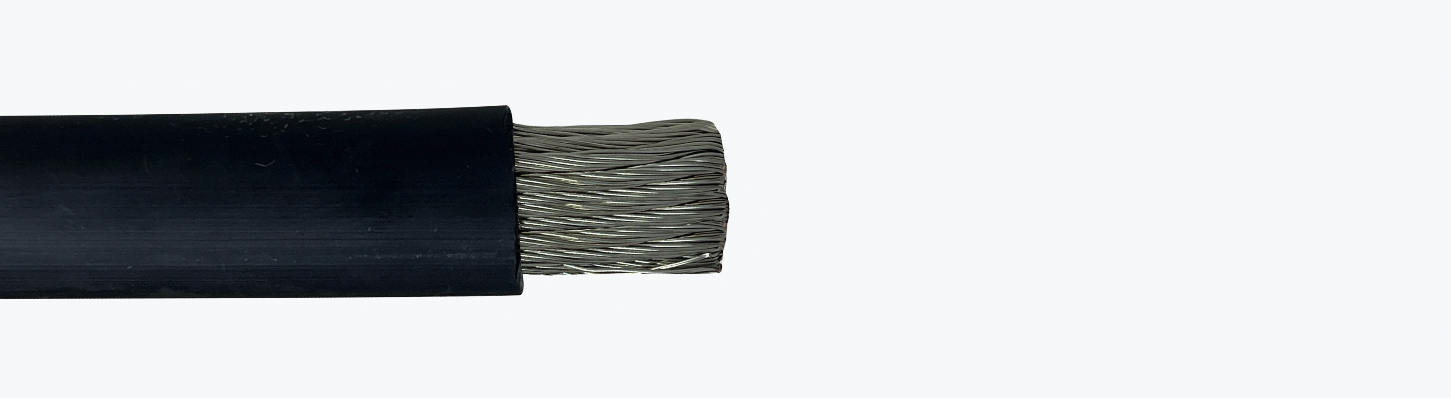
Diesel Locomotive (DLO) Cable is a highly flexible and durable electrical power cable, originally designed for use in diesel-electric trains. It features finely stranded copper conductors and robust insulation, making it suitable for demanding conditions. DLO cable is typically rated for high voltages, commonly 2kV, and excels in environments requiring resistance to heat, abrasion, oil, and moisture.
Beyond its original use in diesel-electric locomotives, DLO cable is widely utilized in various heavy-duty industrial settings due to its robust construction and resistance properties.
DLO cable's exceptional flexibility comes from its finely stranded tinned copper conductors, typically using 24 AWG strands in a rope-lay construction. Its durability is attributed to a dual-extruded construction featuring tough Ethylene Propylene Rubber (EPR) or Ethylene Propylene Diene Monomer (EPDM) insulation and a rugged Chlorinated Polyethylene (CPE) outer jacket.
DLO cable is generally rated for high voltage applications.
DLO cable is manufactured to meet rigorous industry standards, ensuring safety and performance in demanding environments.
While both are flexible power cables, DLO cable and welding cable have key differences that dictate their appropriate use.
Choosing: Select DLO for permanent power distribution, conduit/raceway feeds, cable tray runs (1/0 AWG+), higher voltage applications, and resistance to corrosive elements. Welding cable is suitable for secondary leads of electric welding machines, but it is not an approved substitute for DLO cable in permanent industrial power applications.
Yes, DLO cable is suitable for use in both wet and dry locations. Its RHH/RHW-2 rating signifies that it is rubber-insulated, water-resistant, and approved for direct burial applications, offering versatility in installation methods.
(833) 268-8644
DLO (Diesel Locomotive) Cable is a rugged, extra-flexible 2000V-rated portable power cable engineered for high-amperage industrial, transit, and heavy equipment applications. Originally developed for diesel-electric locomotive traction motors, DLO has become the industry standard wherever heavy-duty power distribution requires extreme conductor flexibility and severe environmental resistance.
Manufactured with high-strand tinned copper conductors, DLO offers maximum resistance to corrosion, oxidation, and chemical degradation. The conductors are encased in a dual-layer system consisting of high-dielectric Ethylene Propylene Rubber (EPR) insulation and an extra-heavy-duty Chlorinated Polyethylene (CPE) outer jacket. Dual-certified under UL 44 as Type RHH/RHW-2, single-conductor DLO is approved for use in permanent conduit, raceways, and cable trays in both wet and dry locations (90°C).
At Wire America, you don't need to purchase full 1,000-foot factory spools for small panel runs or short generator feeds. We supply premium DLO cable from 14 AWG up to 1111 MCM, cut by the foot with zero reel-cut fees and fast nationwide shipping.
Oil, Acid, & Solvent Resistance: Heavy-duty thermoset CPE jacket resists continuous exposure to diesel fuel, hydraulic fluids, ozone, and aggressive industrial chemicals.
Get this thing filled up so you can help Wire America!